.jpg?sfvrsn=d9e817f_1)


Inside-the-Box Printing:Why Packaging Is No Longer Invisible in the E-Commerce Era
By Paul Stack
Senior Sales Advisor
BW Papersystems
There was a time when a box was just a box. Brown. Functional. Unnoticed. It did its job, protected the product, moved through the supply chain, and then vanished without a second thought. But then something changed. E-commerce didn’t just shift how we buy, it changed where brands show up.
Today, the box doesn’t disappear, it arrives. It lands on a customer’s doorstep as the brand’s first physical moment of truth and in many cases, the only one that ever makes it inside the home. There’s no store. No shelf. No sales associate. Just that box. And in that moment, the packaging isn’t just protecting the product, it is the brand. That changes everything.
Back in 2021, I presented
data on the rise of e-commerce and the impact of the COVID lockdown. The real
question now is whether that was just a temporary spike in the data or an early
signal of a lasting change. Revisiting that information today, the
transformation is even more compelling and pronounced:
- $6.4 trillion in projected 2026 global e‑commerce sales
- Nearly 20% of global retail sales is now conducted online
- $80 billion in the e‑commerce packaging market, with corrugated enjoying a $34 billion wallet shar
This isn’t a trend anymore; it’s a structural shift. By 2028, estimates are that half the global population aged 14+ will be active online shoppers. That reality raises the bar: packaging must work harder, driving brand impact, efficiency, and customer engagement.
Consumers aren’t walking into brick-and-mortar stores the way they once did. In the U.S., we’re now seeing retail malls, once the center of community life, being torn down and replaced with mixed-use developments. So the dynamic has flipped. The brand no longer waits for the consumer to walk in; the brand now walks into the home. And when it does, it doesn’t arrive as a storefront or a shelf display. It arrives as a box on the doorstep.
The unboxing moment is no longer trivial, it’s the brand’s last, best chance to make an impression. And the data backs it up:
- 62% of consumers use unboxing videos as part of their online purchase research
- 100+ billion total views using #unboxing searches
- 30-40% of consumers say they would share unique packaging online
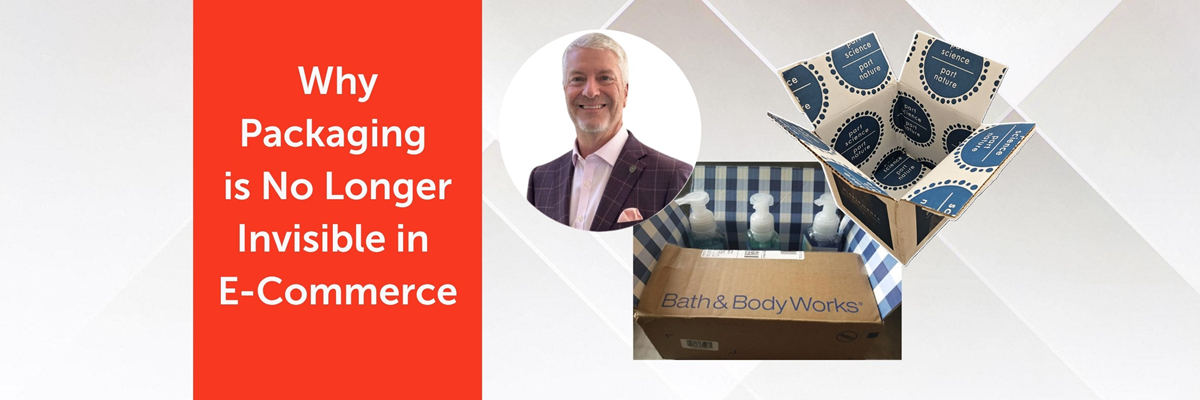
Going back to my retail roots, I’ve always valued the in-store shopping experience. But my turning point came during the pandemic, when stores were closed and I ordered hand soaps from Bath & Body Works. The box arrived plain on the outside, marked only with the company’ name. Yet the moment I opened it; the inside printing immediately transported me back into their store. The familiar trademarked gingham plaid pattern triggered recognition, comfort, and connection. Maybe some of it was subconscious, but I could still sense the in-store experience.
It was a powerful reminder that brands historically built on sensory, in-person experiences are now shifting into a very different environment where packaging and unboxing become the primary in-home brand moments. And that makes this shift even more relevant.
Inside-the-box printing isn’t just about making something look nice, it’s a communication tool. And more often than not, it’s an underutilized one, offering a uninterrupted canvas for the brand to speak directly to the customer at the exact moment they’re most engaged
For B2C brands, it enables
- Storytelling
- Sustainability messaging
- QR‑driven digital engagement
- Returns and recycling guidance
- Emotional connection
One of my favorite examples is a popular outdoor apparel company that uses inside-the-box printing as a form of art. Inside their packaging, they present a detailed map of Mount Everest hiking trails. When the customer receives their order, attention quickly shifts to the box itself. They unfold it, discover something unexpected, and may even end up hanging it on their wall. It becomes a conversation piece, something shared, not discarded. That box isn’t recycled; it’s kept. That experience strengthens emotional connection and helps build lasting brand loyalty.
For B2B, the opportunity is even more underestimated. Not only can the brand utilize the same messaging as B2C, but there is additional opportunities:
- SKU and reorder cues
- Setup instructions
- Visual shelf display guides
- Repeat‑order prompts
This is a moment of value, and too many corrugated box salespeople ignore it. I once asked an experienced sales executive if he discusses inside-the-box printing with his clients. His answer was simple: no. He went on to say, “Why would I bring it up when we don’t offer it?”
In another conversation with a respected general manager of a large converter, I raised the topic and he responded, “I already have inside printing capability, I just run it through the machine twice.” It works, technically. But it’s not very cost effective, and more importantly, it highlights the gap between having a capability and designing a process that fully leverages it in a single, efficient pass.
So that raises an important debate: when is the right time to invest in single pass inside-the-box print capabilities? Do you ignore one of the fastest-growing segments in packaging and continue with business as usual? Do you wait until competitors adopt the capability first, then react? Or do you position yourself ahead of the curve, while the demand signal is already clear?
BW Papersystems engineered single pass inside-the-box printing units across their G-Grafix and ServoPro platforms, including both flexo folder-gluers and rotary die cutters. Demand surged in 2021–2022 and remains steady today.
Two recent installations make one thing clear: the market isn’t preparing for inside-the-box printing, it already expects it. Both five-color BW Papersystems machines, one a rotary die cutter, the other a flexo folder-gluer with single pass inside-the-box print capability, designed to deliver more than just a box. These systems allow them to:
- Attract new market opportunities with stronger margins
- Offer inside print as a value‑add differentiator often locking in clients for the long term
- Boost throughput by up to 50%
- Reduce sheet waste and setup time keeping their competitive edge
When converters invest in technology like this, it means the market has already shifted. E‑commerce hasn’t just changed logistics; it has changed meaning. With fewer physical touchpoints, the inside of the box may be the last, best conversation a brand has with its customer.
Customers expect more from packaging than ever before. Inside-the-box printing is no longer emerging, it’s here. If you’re not leading the conversation, you can bet your competitors are.
.tmb-webp.webp?Culture=en&sfvrsn=6cca827f_4 "Contact Banner")