

.tmb-small.webp?Culture=en&sfvrsn=d9e817f_2)




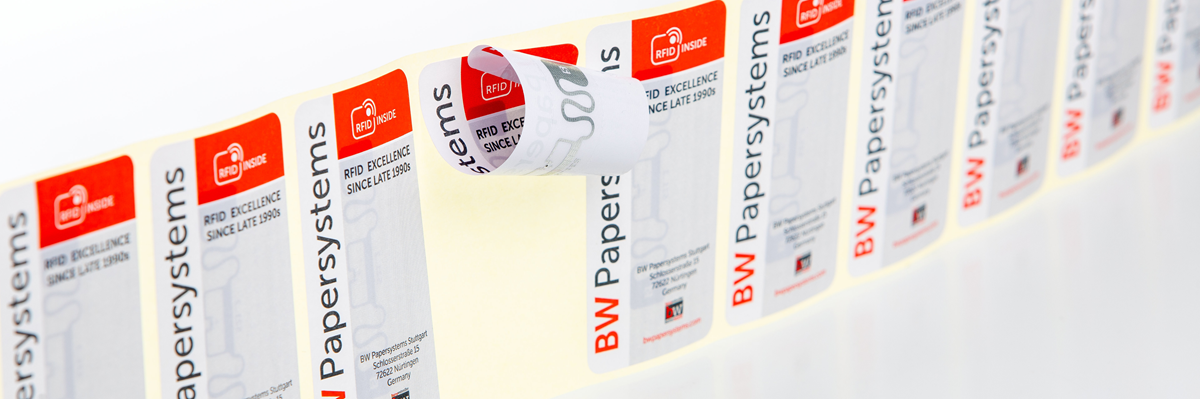
Why RFID Tag Production is the Next Step for Label Converters and How to Get Started
In this article, we will walk through how RFID tag production works, what a typical RFID converting line looks like, and the key considerations for label manufacturers who are exploring RFID for the first time. Continue reading to see how BW Papersystems can help you quickly launch RFID capabilities in your operation.
What Are RFID Tags?
An RFID tag stores and transmits data using radio waves instead of printed barcodes. When the tag enters the field of an RFID reader, the chip and antenna work together to send a unique identifier and, in many cases, additional data back to the system. That information can then be used for:
- Item-level inventory tracking
- Supply chain visibility and shipping verification
- Authentication and brand protection
- Asset tracking in warehouses, hospitals, or manufacturing facilities
How RFID Labels Are Built
Most pressure-sensitive RFID labels and tickets share a similar structure, even if materials and formats vary by application.
- RFID Inlay: The inlay contains the integrated circuit (chip) and the antenna mounted on a carrier material. The chip stores the data and controls communication with the reader, while the antenna captures and radiates the energy needed for the chip to respond.
- Face Stock or Ticket Substrate: The printable surface your customer uses for branding, barcodes, and text is known as the face stock or ticket substrate. This component can be paper, film, or a specialty material depending on the environment and application.
- Adhesive Layers and Liner: Pressure-sensitive adhesive bonds the label to cartons, garments, pallets, or other items. A release liner carries the label through printing, converting, and application equipment.
- Optional Protective Layers: Overlaminates, varnishes, or specialty constructions can protect the inlay and printing from abrasion, moisture, heat, or chemicals in demanding environments.
As a label converter, you already work with face stocks, adhesives, and liners every day. RFID tag production adds inlays and tighter control of placement and quality, but the overall structure will look familiar. However, when you start discussing RFID with inlay suppliers and customers, you will encounter a few important distinctions:
- Dry vs. Wet Inlays: Dry inlays have a chip and antenna on a carrier without adhesive. These are often integrated into more complex constructions where the adhesive or laminating process happens on your line. Wet inlays are pre-laminated with adhesive and a liner, ready to be applied directly to a web. Wet inlays simplify handling but may offer less flexibility for specialized constructions.
- RFID Frequency Ranges: High Frequency (HF) inlays are common in access control, ticketing, and payment cards, while Ultra-High Frequency (UHF) inlays are widely used for item-level retail, logistics, and supply chain applications. For many label and tag converters, UHF inlays represent the primary growth area, especially for retail and distribution center work, due to the longer read ranges and faster read rates they provide.
Inside RFID Tag Production: From Inlay to Finished Roll
Once you understand what goes into an RFID label, the next question is: how do you actually make one at scale? For label converters, the RFID converting process will feel familiar, because it mirrors many steps you already know from pressure-sensitive label production, with a few additional controls to keep the inlays in the right place and performing reliably.
From Plain Web to Smart Web
RFID tag production starts with a base material, typically supplied on a roll. Depending on the construction, that might be:
- A paper or film web that will receive the inlays
- A liner carrying wet inlays
- A partially built laminate that will be completed on your RFID line
The first step is unwinding this material and stabilizing the web. Tension control, web guiding, and precise register are essential here, because any variation will show up later as inlay misplacement or registration issues between the inlay and the die-cut label.
Precise Inlay Placement or Lamination
The heart of RFID converting is getting the inlays onto or into the web accurately and consistently. For dry inlays, the machine places each inlay at a defined pitch and position, typically using vacuum drums or specialized application heads. For wet inlays, the machine may laminate an inlay web onto a face-stock web, aligning the pre-spaced inlays with the label layout.
Throughout this step, the line relies on sensors and registration marks to keep inlays exactly where they need to be, both down-web and across the web. Even small variations can affect read performance, especially in high-speed, high-density applications. That is why modern RFID lines build in tight process control and automatic correction rather than relying on manual adjustment alone.
Building the Final Label Construction
Once the inlays are in place, the line completes the label or ticket construction. This can include:
- Laminating face stock over the inlays
- Adding additional layers such as adhesive films, barrier layers, or protective overlaminates
- Creating multi-layer constructions for specialty applications that need greater durability or tamper resistance
For converters, this stage looks a lot like traditional lamination work, with one key difference: every layer now has to be aligned not only to the web, but also to the inlays beneath it. Good web handling, stable tension, and accurate register between stations are what keep the inlay exactly where the printed artwork and die-cut will be.
Die-Cutting, Matrix Removal, and Finishing
At this point, the product may look no different from a standard label or ticket, but below the surface each piece now carries a functioning RFID inlay.
Inline Testing and Bad Tag Removal
One of the most important differences between traditional label converting and RFID converting is inline quality control. A high-speed RFID line typically incorporates:
- RFID readers that test each inlay after it is placed or laminated
- Tracking systems that mark defective inlays as the web moves through the machine
- Bad tag removal or “doctoring”, where defective labels are automatically removed or replaced before the finished roll is shipped
This step protects both your yield and your customer’s reputation. By removing non-functioning or misplaced tags inline, you reduce waste, minimize rework, and prevent unreadable labels from reaching your customer’s store, warehouse, or production line.
Why Now is the Time to Add RFID Capabilities
For most label converters, RFID is not an entirely new business, but a logical extension of what you already do well. You understand web handling, coatings, adhesives, and finishing, and you already invest in high performance converting equipment. Adding RFID capability allows you to build on that foundation and offer a higher margin, more strategic product line without walking away from your core business. With the right equipment and support, you can protect your existing accounts, open doors with new brands, and position your company as a partner that can grow alongside evolving RFID programs instead of simply reacting to them.
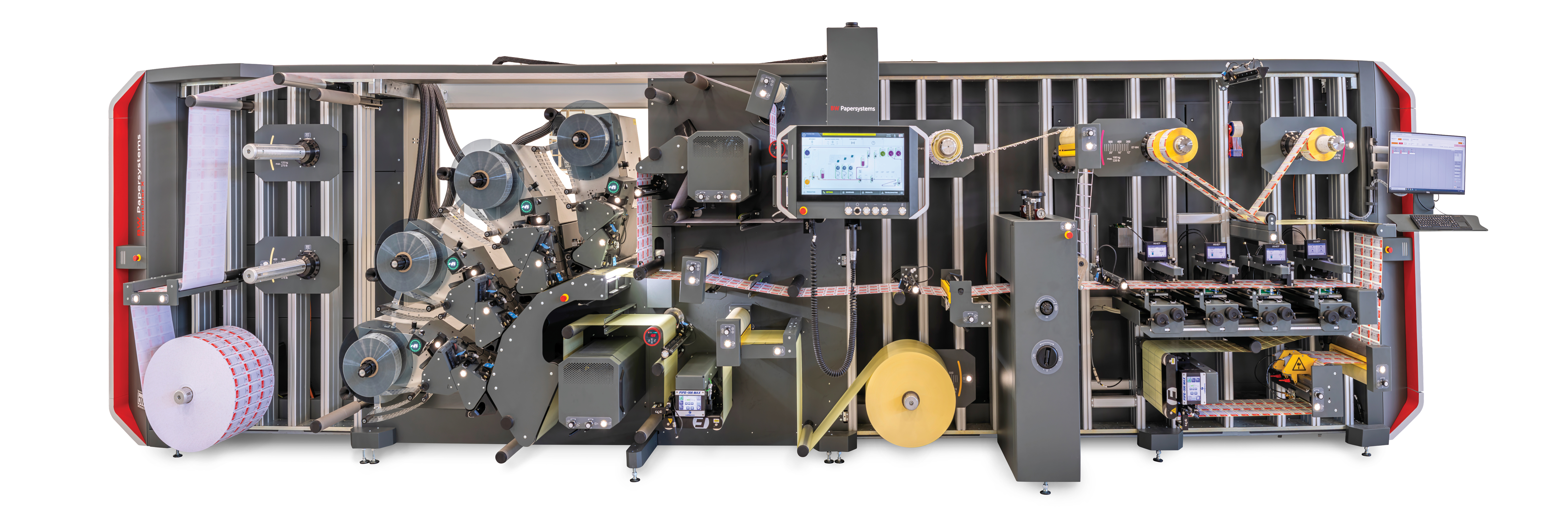
The SpeedLiner X: Next-Generation RFID Converting for Label Producers
With SpeedLiner X, label converters gain a range of advantages that make RFID adoption faster and less risky, including:
- Lower Barrier to Entry: Competitive cost per tag, compact footprint, and a configuration that aligns with your current volume and applications.
- Faster Time to Production: Automated setup, recipes, and smart web handling shorten ramp-up for new jobs and reduce trial-and-error on press.
- Consistent Quality and Performance: Precise inlay placement, integrated testing, and bad-tag removal protect yield and ensure reliable read rates.
- Scalable, Modular Capacity: The ability to add tracks, attachers, and options over time as customer demand grows without replacing the core machine.
- Operator-Friendly Automation: Intuitive controls, clear process visibility, and easy access for maintenance so your team can run RFID jobs with confidence.
Getting Started with RFID Tag Production
Getting started with a clear plan and a machine designed specifically for RFID tag production helps you move up the value chain before those positions are filled. Here’s how your organization can implement RFID tag production on your floor:
- Define Your RFID Applications and Customers: Start by clarifying where RFID fits in your current business. Talk with key customers about upcoming programs, typical label or ticket sizes, and volume expectations, especially in apparel, retail, logistics, and asset tracking. This helps you right-size your first investments and prioritize applications that will generate quick wins.
- Select Inlays, Materials, and Partners: Identify which inlay formats (dry or wet) and frequency ranges your customers need, then align with trusted inlay suppliers. Confirm that inlay formats, web widths, and substrates will run smoothly on your planned converting line. At the same time, discuss encoding and verification requirements so your process matches your customers’ data workflows.
- Plan Your Converting Line Configuration: Decide whether RFID will run on a dedicated line or be integrated into existing finishing operations. Define the required web width, number of production tracks, and target output per hour, keeping future growth in mind. Build in inspection, bad tag removal, and clear quality checkpoints so you can guarantee performance from day one.
- Prepare Operations, Training, and Maintenance: Review operator skill sets and plan training around RFID-specific tasks such as inlay handling, recipe setup, and troubleshooting read issues. Establish standard operating procedures for changeovers, handling non-conforming tags, and routine maintenance. The goal is to make RFID production feel like a natural extension of your current workflow, not a separate, “mysterious” process.
- Model ROI and Map Out Your Growth Plan: Work through a clear cost-per-tag model that includes equipment, materials, labor, energy, and expected waste. Use this to identify your break-even volume and to compare different machine configurations or automation options. With a solid ROI model in hand, you can justify the investment internally and build a roadmap for scaling capacity as customer demand grows.
Jump into RFID Tag Production with BW Papersystems
.tmb-webp.webp?Culture=en&sfvrsn=6cca827f_4 "Contact Banner")